An agent starts the score.
You make it yours.
Three actual states from Chiptunes: an agent-generated arrangement, a hand-edited note, and the edited score exported as a share link and a Game Boy cartridge. This is a sequence of captures, not a continuous recording or a live agent session.
The editable document was verified, not every musical claim. The generated document matched the editor and the agent readback. After the manual edit, the exported link carried that edited document exactly. Reopening it retained the C4 Arp note.
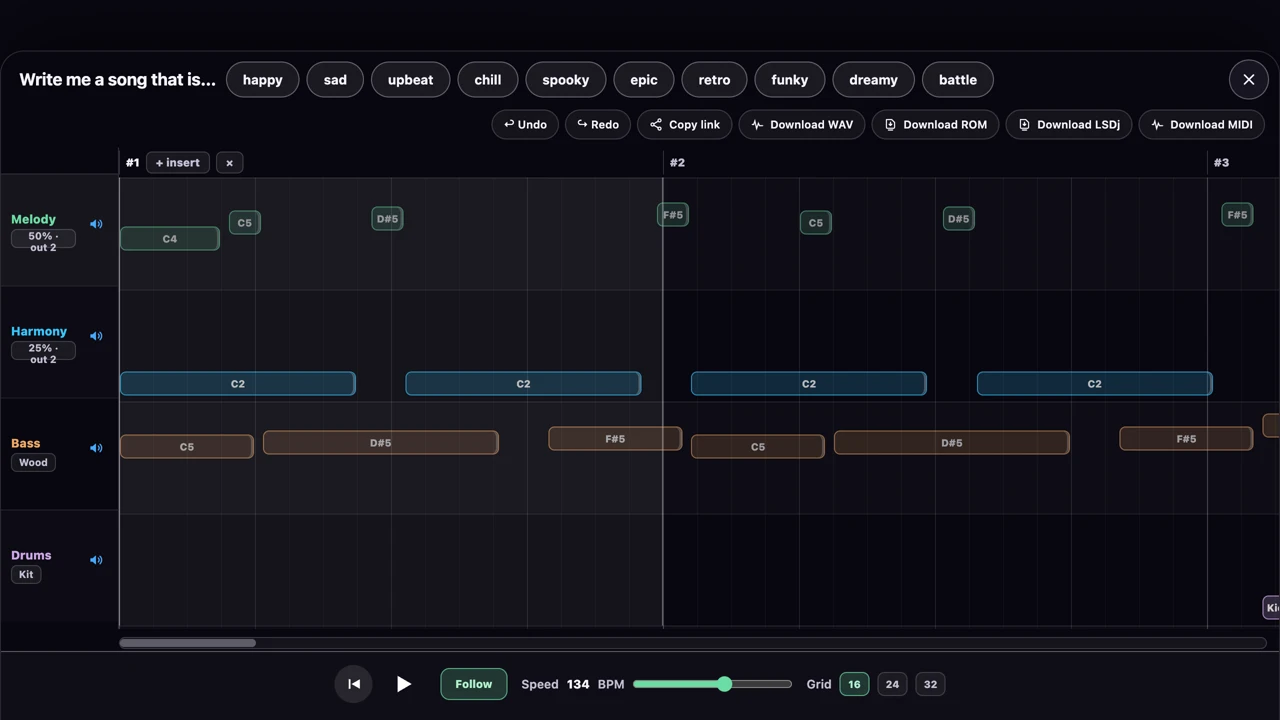
chiptunes_compose tool returned an arrangement; chiptunes_editor opened its document in the real tracker.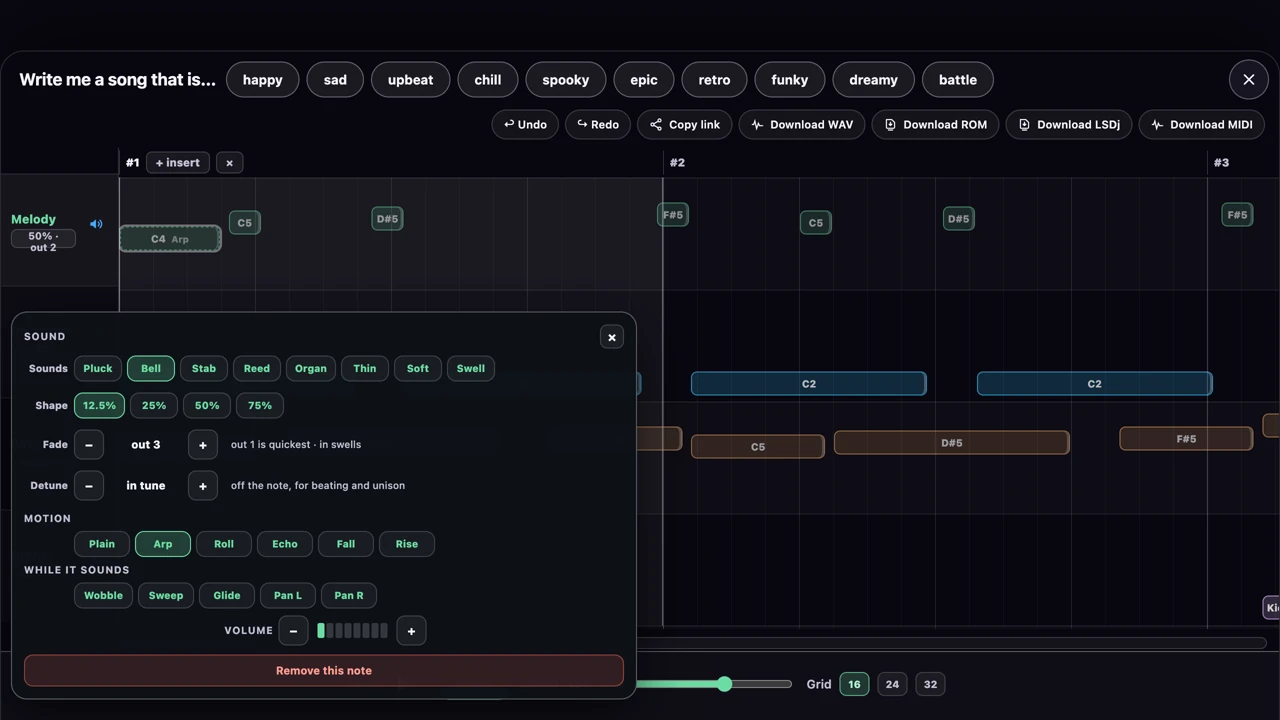
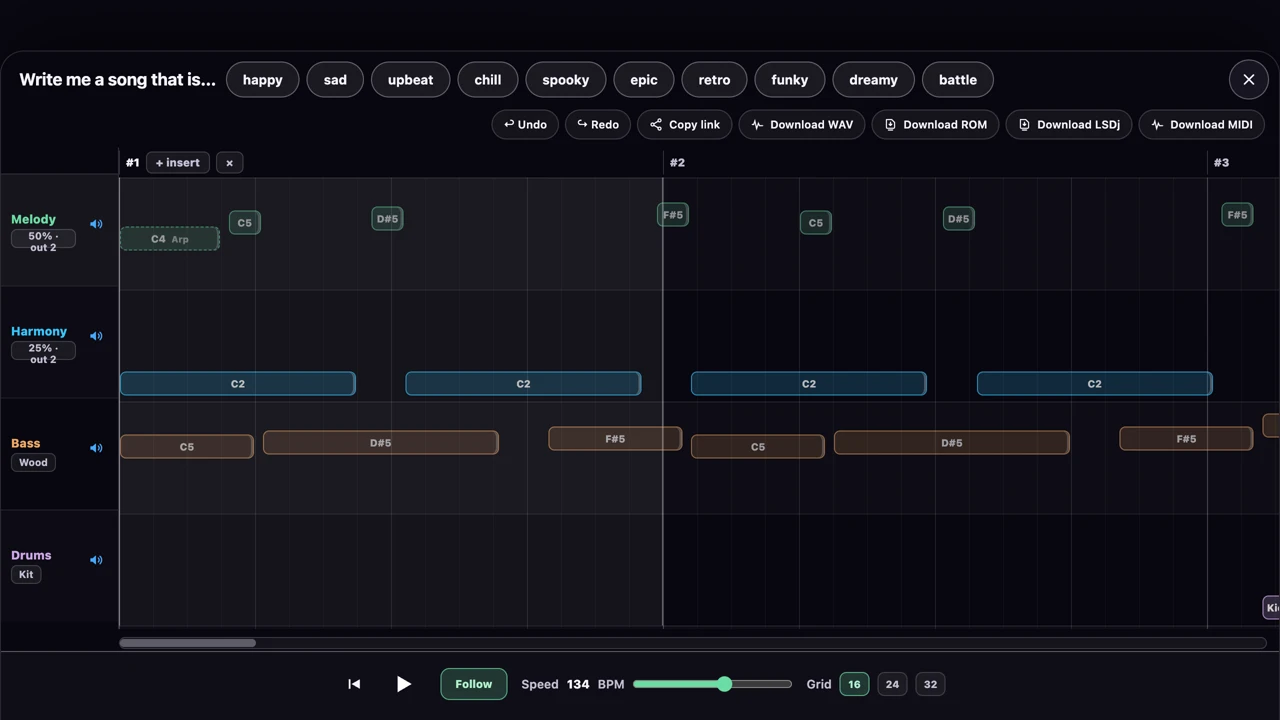
chiptunes_export received that edited document, returned a matching share link, and downloaded the 32,768-byte cartridge offered above.What this session did and did not prove
- The compose request returned an unmet style constraint. It is retained in the actual response, not counted as satisfied.
- The tool reported 179 BPM while the tracker initially displayed 134 BPM, with other values after reopening. Document equality was checked; tempo reporting did not agree. This session is not an audible parity test.
- The first tool response reported playback before browser activation. A response saying “playing” does not establish that sound was heard.
- WebMCP was available on the initial page, with sixteen tools. This browser disabled it on the long shared-song URL because the configuration exceeded supported limits. The return check used the ordinary editor.
- The actual downloaded cartridge has the recorded size, SHA-256 and valid header checksum. This capture did not include an emulator run or a physical Game Boy test.
The link response, ROM response, edited document and full verification record are preserved.
Chiptunes source · Game Boy is a trademark of Nintendo. Independent project, not affiliated with Nintendo.